The Quiet Courage Behind the Mission: Demanding Justice for America's Military Families
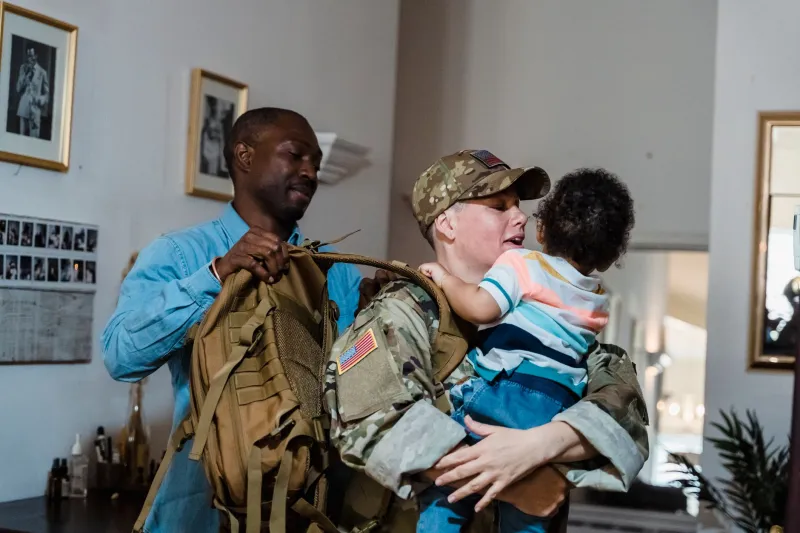
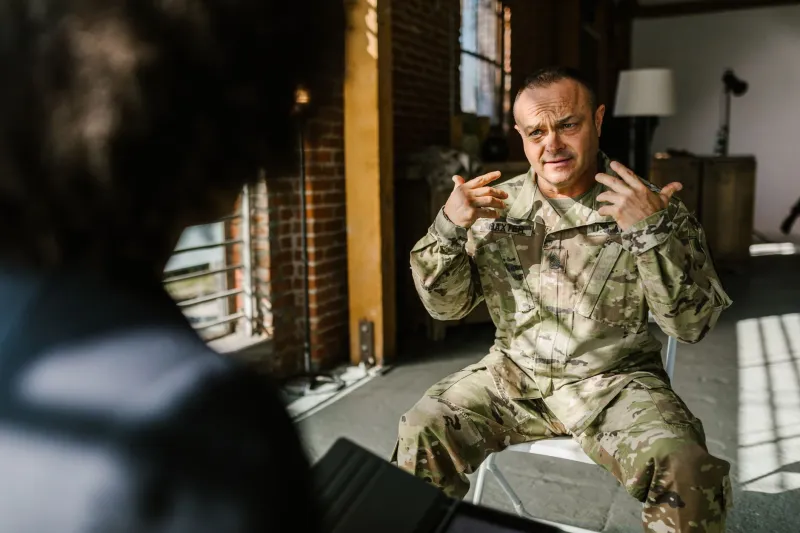
There is a photograph that sits on the mantle of nearly every military home in America. In it, a uniformed service member stands at attention, shoulders squared, expression resolute. It is a portrait of strength, of commitment, of national pride. What the photograph rarely captures is what lies just outside the frame: the spouse who drove to the ceremony alone, the child who has already learned not to cry at airports, the grandmother who has quietly become the family's anchor during yet another deployment.
America has grown reasonably skilled at honoring the person in the photograph. It has been far less attentive to everyone else.
This is not a criticism of the gratitude this nation extends to its service members—that gratitude is earned and deserved. It is, rather, an argument that the definition of military sacrifice has been drawn too narrowly for too long, and that the policy and cultural frameworks meant to support those who serve must be expanded, urgently and deliberately, to encompass the families who serve alongside them.
The Mathematics of Constant Departure
The average military family relocates every two to three years. Over the course of a twenty-year career, that calculus produces a staggering accumulation of disruption: ten to twelve moves across states or continents, a dozen school transitions for children who must rebuild friendships and academic footing with each one, and a recurring cycle of community loss that civilian families rarely experience even once.
For military spouses—the vast majority of whom are women, though the population is increasingly diverse—each relocation typically means the abandonment of professional momentum painstakingly built at the previous duty station. Licensing requirements that do not transfer across state lines force nurses, teachers, cosmetologists, and attorneys to restart credentialing processes from scratch. Graduate school enrollment is interrupted. Business relationships dissolve. Résumés accumulate gaps that hiring managers, unfamiliar with the military lifestyle, frequently misread as disengagement.
The economic consequences are measurable. Studies conducted by the Department of Defense have found that military spouses earn significantly less than their civilian counterparts with equivalent education levels—a gap attributable in large part to the career disruption inherent in military life. The unemployment rate among military spouses consistently hovers between 20 and 25 percent, more than four times the national average. These are not statistics about ambition or capability. They are statistics about a system that has not been designed with military families in mind.
What Deployment Actually Looks Like at Home
When a service member deploys, the public imagination tends toward images of distant battlefields and heroic sacrifice—and rightly so. What receives considerably less attention is the domestic reality left behind.
The military spouse managing a household alone during a seven-month deployment is making decisions that would challenge any two-parent household: managing finances, maintaining a vehicle, navigating a child's behavioral struggles at school, coordinating medical appointments, and doing all of it while absorbing the ambient anxiety of not knowing whether the next phone call will bring good news or devastating news. She is doing this, in many cases, in a city where she knows almost no one, far from extended family, in a neighborhood where the neighbors do not know what her family is going through.
Sarah Calloway, whose husband completed three deployments with the 82nd Airborne Division, described the experience with characteristic understatement. "People ask how you do it," she said. "You do it because you have to. But there are nights when you're not sure how much more you have left."
The children in these households carry their own quiet burdens. Research published in military family journals has documented elevated rates of anxiety, depression, and academic difficulty among children of deployed service members. The emotional labor of managing a parent's absence—of performing normalcy for younger siblings, of not wanting to add to a remaining parent's stress—can take a toll that surfaces years later, often without any connection made to its origin.
The Policy Failures That Demand Correction
The failures here are not merely cultural—they are legislative. Despite years of advocacy by organizations such as the Military Officers Association of America and the National Military Family Association, several critical policy gaps remain unaddressed.
Interstate licensing compacts for military spouses have expanded in recent years, covering a growing number of professions. But coverage remains incomplete, and implementation varies widely by state. A military spouse who is a licensed professional counselor in Texas may still face a months-long re-licensure process when her family is transferred to Virginia. That delay is not an inconvenience—it is a career disruption that compounds the financial strain already inherent in relocation.
School transition policies present a similar patchwork of inadequacy. The Interstate Compact on Educational Opportunity for Military Children has made meaningful progress, but enforcement mechanisms are weak, and local school districts retain considerable discretion in how—or whether—they honor compact provisions. A high school junior who has completed the prerequisite sequence for Advanced Placement courses at one installation may find those credits disputed at the next, jeopardizing college admission prospects through no fault of her own.
Beyond licensing and education, the broader question of mental health support for military families remains inadequately addressed. TRICARE, the military's health insurance program, has expanded its behavioral health coverage in recent years, but access to in-network providers—particularly in communities near smaller installations—remains a persistent challenge. Military spouses who are experiencing depression, anxiety, or the effects of secondary trauma frequently find that the nearest available provider has a months-long waitlist.
What Corporate America Can Do
Government action, while essential, is not the only lever available. The private sector has both the capacity and, increasingly, the stated commitment to support military families—and there are genuine success stories worth amplifying.
Companies such as USAA, JPMorgan Chase, and Amazon have developed formal military spouse hiring programs that account for the realities of frequent relocation through remote work options, portable positions, and dedicated onboarding support. These programs are not charity—they are sound talent acquisition strategies that tap into a workforce of educated, resilient, highly adaptable individuals who happen to have been systematically underemployed.
Smaller employers can participate in similar initiatives through the Hiring Our Heroes program, administered by the U.S. Chamber of Commerce Foundation, which connects military spouses with employment opportunities and offers employers guidance on creating military-family-friendly workplace policies.
The call here is not for special treatment. It is for the removal of structural barriers that have made equal opportunity inaccessible to a population that has already given more than most.
A Celebration and a Demand
Let it be stated plainly: military families are among the most resilient, resourceful, and patriotic communities in the United States. The strength demonstrated by spouses and children who absorb the costs of service with grace and determination is itself a form of heroism—quieter than what is captured in photographs, but no less real.
That strength, however, should not be used as justification for continued neglect. The fact that military families have endured systemic inadequacies without public complaint does not mean those inadequacies are acceptable. It means that America has been permitted to take their sacrifice for granted.
At Back The Heroes, we believe that standing behind those who serve this nation means standing behind their entire households. It means demanding that Congress close the licensing gaps that cost military spouses their careers. It means pressuring school districts to honor the educational continuity that military children deserve. It means holding corporations accountable to the commitments they make in Veterans Day press releases every November.
And it means telling the full story of military sacrifice—not just the uniformed figure in the photograph, but everyone who stands just outside the frame, holding the family together while the mission continues.