Beneath the Uniform: Confronting the Silent Mental Health Emergency Among America's Active-Duty Troops
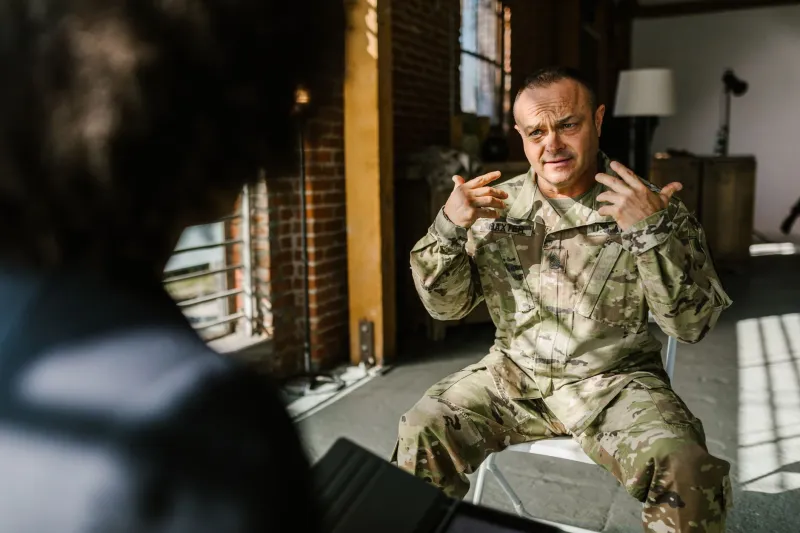
When Staff Sergeant Daniel Mercer returned from his third deployment to Afghanistan in 2019, his family noticed he was quieter than usual. He slept fitfully, avoided crowded places, and rarely spoke about what he had witnessed overseas. For months, he told no one—not his commanding officer, not the chaplain, not even his wife, Karen. "He thought admitting it would end his career," Karen recalled. "He thought it made him weak. That's what scared me most."
Daniel's story is not exceptional. It is, tragically, common.
Across America's military installations—from Fort Bragg in North Carolina to Camp Pendleton in California—tens of thousands of active-duty service members are quietly wrestling with the psychological aftermath of combat, prolonged operational stress, and the relentless demands of military life. The numbers are sobering. According to the Department of Defense, suicide claimed the lives of more than 500 active-duty service members in a single recent year, a figure that surpassed combat casualties. Post-traumatic stress disorder affects an estimated 11 to 20 percent of veterans who served in Operations Iraqi Freedom and Enduring Freedom, and depression among active-duty personnel continues to rise at rates that outpace the general population.
Yet for all the valor we rightly celebrate on Veterans Day and Memorial Day, the invisible wounds carried by those still in uniform receive a fraction of the public discourse they deserve.
A Culture of Silence
The military's institutional culture, forged through generations of stoicism and mission-first mentality, has long discouraged open discussion of psychological distress. Service members are trained to perform under pressure, to suppress fear, and to project strength in the face of adversity. These are admirable qualities in combat. In the context of mental health, however, they can be lethal.
Dr. Melissa Hartwell, a clinical psychologist who has worked with active-duty personnel at military treatment facilities for over fifteen years, describes the dynamic plainly. "The stigma is deeply embedded," she explained in a recent interview. "Many service members genuinely believe that seeking help will result in lost promotions, reassignment, or being seen as unfit for duty. That fear keeps people from getting care they desperately need."
The Pentagon has made incremental strides in recent years. Programs such as the Real Warriors Campaign and the expansion of Military OneSource have attempted to normalize help-seeking behavior. Embedded behavioral health teams have been deployed to brigade-level units, placing mental health professionals directly within military formations. These are meaningful developments, and they deserve recognition. However, experts argue that systemic change requires far more than program expansion—it demands a fundamental cultural shift that must be modeled from the top of the chain of command downward.
What the Data Reveals
The scope of the crisis becomes clearer when examined through the lens of hard statistics. A 2022 report from the Defense Suicide Prevention Office found that the suicide rate among active-duty military members was 24.3 per 100,000—considerably higher than the adjusted civilian rate for comparable demographics. Among younger enlisted personnel, ages 17 to 24, the figures are even more alarming.
PTSD, meanwhile, does not confine itself to combat veterans. Service members who have experienced military sexual trauma, operational accidents, or the cumulative weight of repeated deployments are equally susceptible. Depression, anxiety disorders, and substance misuse frequently co-occur, creating a complex web of conditions that standard treatment protocols struggle to address comprehensively.
Perhaps most troubling is the gap between those who need care and those who receive it. The RAND Corporation has estimated that fewer than half of returning service members who meet the criteria for a mental health disorder seek treatment. The barriers are multiple: geographic distance from care facilities, scheduling conflicts with duty requirements, fear of career consequences, and a persistent belief that self-reliance is the only acceptable response to suffering.
The Role of Families on the Front Lines
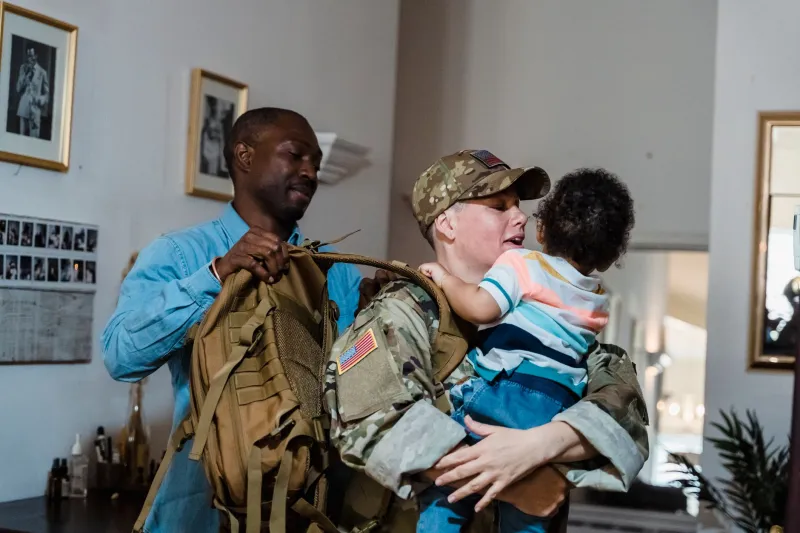
Military spouses and children are often the first to recognize the warning signs—and the least equipped to respond. Karen Mercer described the helplessness she felt watching her husband withdraw. "I didn't know if I should push him to talk or give him space. I didn't know who to call. I didn't want to do something that would make it worse."
Family members frequently absorb the secondary trauma of their loved one's condition while managing households, raising children, and navigating the bureaucratic complexity of military support systems largely on their own. Organizations such as the National Military Family Association and Blue Star Families have long advocated for better family-centered mental health resources, and their work is indispensable. Still, gaps in access and awareness remain significant.
How Communities Can Become Part of the Solution
This is where American citizens—regardless of whether they have ever worn a uniform—have both an opportunity and an obligation to act. The communities surrounding military installations hold enormous potential as support networks, and that potential is largely untapped.
Establish peer support networks. Civilian community organizations can partner with local installations to develop peer support programs that connect veterans in recovery with active-duty personnel who may be struggling. Shared experience is one of the most powerful therapeutic tools available, and it carries none of the institutional stigma associated with formal treatment.
Fund local mental health resources. Many military families live off-post and rely on civilian healthcare providers who may have limited experience treating combat-related conditions. Community fundraising efforts directed toward training local therapists in evidence-based treatments such as Prolonged Exposure and Cognitive Processing Therapy can dramatically improve the quality of care available.
Advocate for policy change. Contact your congressional representatives and urge support for legislation that expands mental health funding within the Department of Defense, strengthens protections for service members who seek treatment, and invests in suicide prevention research. Policy change begins with constituent pressure.
Reduce stigma through public education. Host community forums, invite military mental health professionals to speak at civic organizations, and amplify the stories of those who have sought help and recovered. Normalizing the conversation is, in itself, a form of intervention.
Support organizations doing the work. Groups such as the Headstrong Project, Give an Hour, and the Bob Woodruff Foundation are delivering mental health services directly to service members and veterans. Donating, volunteering, and raising awareness for these organizations extends their reach and their impact.
A Nation's Debt, A Nation's Responsibility
Daniel Mercer eventually sought help—after Karen found a therapist through a civilian nonprofit that specialized in military trauma. He completed a course of treatment, returned to full duty, and was recently promoted. "Getting help didn't end my career," he said. "Not getting help would have ended my life."
America asks extraordinary things of the men and women who serve beneath its flag. It asks them to leave their families, endure unimaginable conditions, and carry burdens that most citizens will never fully comprehend. The least this nation can offer in return is a genuine commitment to their psychological well-being—not merely in speeches and ceremonies, but in funding, policy, and community action.
The heroes in our midst are fighting battles that no medal can honor and no parade can heal. It is time for every American community to stand with them in that fight.