Where Have All the Volunteers Gone? The Silent Collapse of America's Emergency Ranks
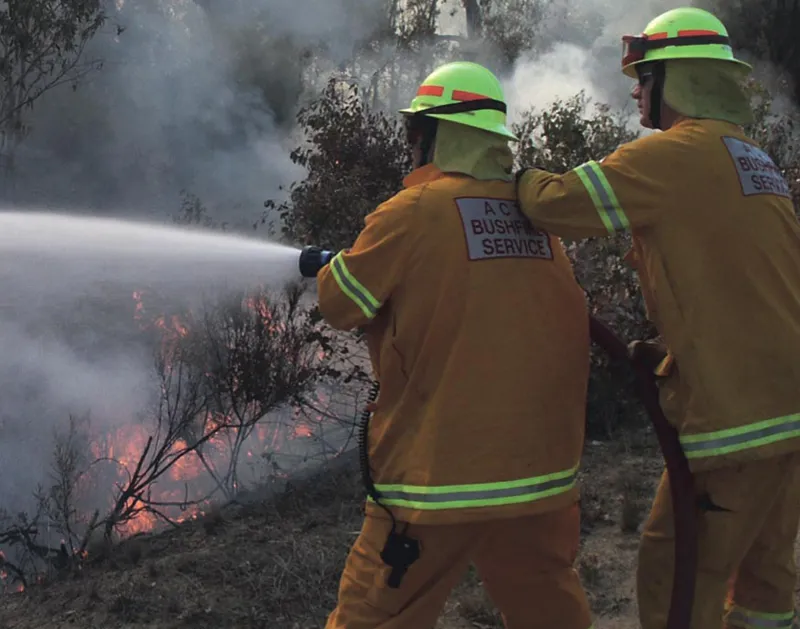
Photo: Darren C., CC BY 3.0, via Wikimedia Commons
Somewhere in America tonight, a fire siren will sound over a town where the truck can't legally leave the station—not for lack of equipment, but for lack of people.
This is not hyperbole. It is the quiet arithmetic of a national decline that Washington rarely mentions and most Americans have never had to think about. In the early 1980s, roughly one million Americans served as volunteer firefighters. Today that number hovers around 650,000—and falling. The National Volunteer Fire Council has warned for years that departments across the heartland are operating at fractions of their needed rosters, and the volunteer EMT corps that keeps rural ambulances staffed is eroding even faster.
We are witnessing the slow-motion abandonment of the men and women who stand between our small towns and catastrophe. And frankly, we are all complicit.
The Math of a Quiet Emergency
Consider the stakes. Volunteer departments protect the overwhelming majority of America's landmass. When a farm town loses its fire company, response times don't degrade gracefully—they collapse. Neighboring departments, themselves understaffed, cover the gap with mutual aid runs that stretch twenty, thirty, forty minutes. In cardiac arrest, that difference is measured in funerals.
The demographic trends are unforgiving. Rural America is aging. Young people leave for cities. Two-income households no longer have a parent with flexible daytime hours to answer a 2 p.m. alarm. And the training burden—federal standards now require hundreds of certification hours—means volunteering is no longer something you can do on a whim.
Bake Sales Will Not Save Us
Here is where too many communities get it wrong: they treat the volunteer shortage as a fundraising problem. It is not. It is a recruitment, retention, and respect problem.
A pancake breakfast cannot compete with the structural realities pushing volunteers out the door: employers who fire or penalize workers for leaving mid-shift to respond to a call; student debt that makes unpaid service a luxury; and a culture that increasingly treats civic service as someone else's job.
If we are serious about saving volunteer emergency services—and we must be—then the solutions must be structural:
-
Employment protection laws. States should require employers to grant reasonable leave for emergency responses, as several already do. A citizen should never have to choose between their job and their neighbor's burning house.
-
Education incentives. Tuition credits and student-loan forgiveness for certified volunteer EMTs and firefighters—modeled on existing military service benefits—would put service within reach of young Americans who want to give back but cannot afford to.
-
Property tax abatements and pension stipends. A modest length-of-service award program, already proven in states like New York, gives decades of volunteer service a tangible recognition. New York's LOSAP program shows municipalities can honor service without breaking budgets.
-
Modernized recruiting. Departments must recruit where young people are—online, at trade schools, at community colleges—not with a mimeographed flyer at the hardware store.
A Civic Duty, Not a Favor
Let us be plain about the moral stakes. The volunteer fire service was never charity. It was citizenship—the original American mutual aid, older than the Republic itself, with the first volunteer fire company founded by Franklin in Philadelphia in 1736. The men and women who answer those alarms are not doing us a favor. They are performing the most fundamental duty of self-government: bearing one another's burdens.
When we let that tradition wither—through indifference, through policy failure, through the lazy assumption that someone else will come—we do not merely lose emergency coverage. We lose a load-bearing pillar of American community itself.
The Choice Before Us
Every town council, every state legislature, every employer reading this: the volunteer emergency service in your jurisdiction is not guaranteed. It exists right now only because a shrinking band of citizens keeps choosing to serve. Meet them halfway. Fund the incentives. Pass the protections. Fill the empty chairs at the firehouse table before the table itself is gone.
The sirens are still sounding. The question is whether we will still answer.