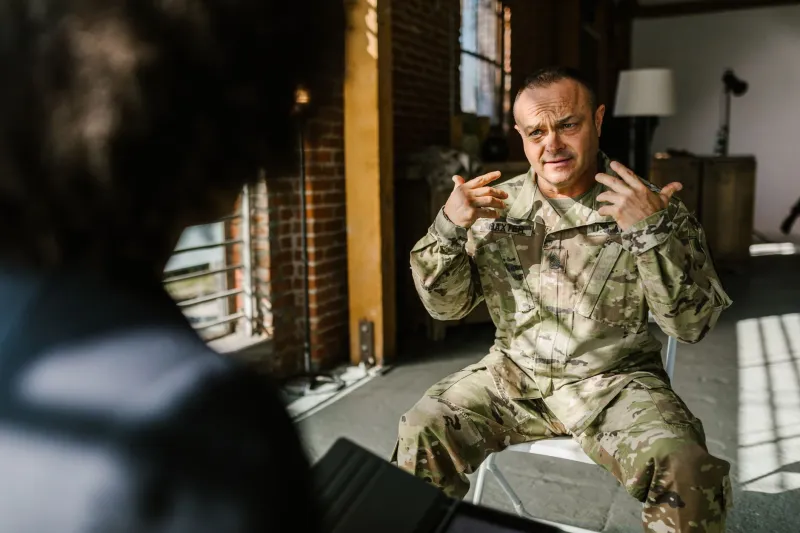
Ninety Days That Decide Everything: The Untold Battle After the Homecoming Banner Comes Down
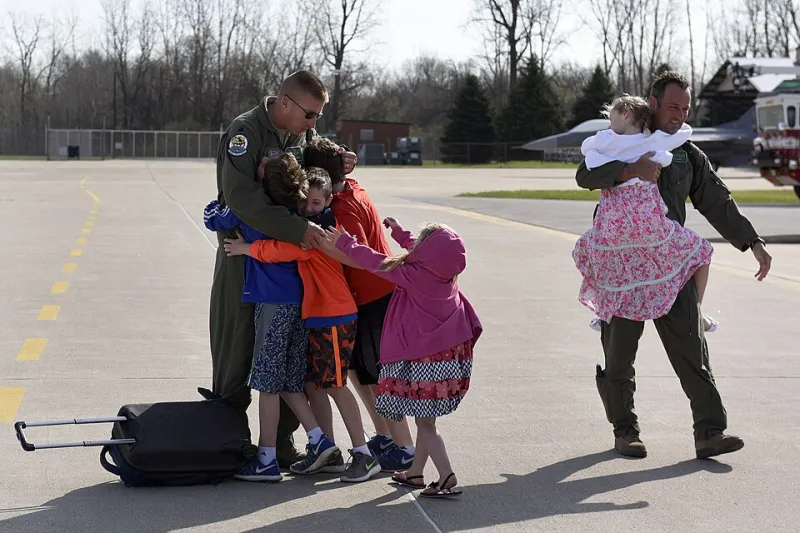
Photo: The National Guard Staff Sgt. Michael Hughes/180th Fighter Wing Ohio National Guard, Public domain, via Wikimedia Commons
The welcome home celebration at Fort Liberty lasts an afternoon. The reintegration that follows lasts far longer—and far too many families are navigating it alone.
When a service member steps off the plane and into the arms of their spouse and children, America claps. Cameras roll. Politicians shake hands. And then, quietly, the crowd goes home. What happens over the next three months—when the adrenaline of reunion gives way to the grind of rediscovery—is the most underreported challenge facing our military families today.
The Honeymoon Ends Fast
Ask any seasoned military spouse and they'll tell you the same thing: the first two weeks are euphoric. Weeks three through twelve are where the real work begins.
A spouse who ran the entire household—finances, discipline, school pickups, midnight emergencies—doesn't simply hand the keys back. The returning service member, accustomed to a chain of command and a mission-focused existence, suddenly has no clearly defined role at the kitchen table. Children who've grown a foot taller in a deployment year may not know how to talk to a parent who is, in every meaningful way, a stranger wearing a familiar face.
Drill instructors don't teach this. Deployment orders don't prepare you for it. And yet every family that has endured a separation knows it intimately.
The Financial Quiet Before the Storm
Here's what rarely makes the evening news: money problems spike after homecoming, not during deployment.
Combat pay and separation allowances vanish. A service member may return to a demotion, a stalled career, or a transition to civilian employment that takes months longer than planned. Spouses who took on second jobs to make ends meet face difficult decisions about stepping back. Credit card debt accumulated during a long separation comes due with punishing interest.
Add to this the well-documented spike in VA claims processing backlogs during the post-deployment window, and you have families under financial pressure at precisely the moment they need stability most.
The Identity Crisis Nobody Photographs
For many veterans, the uniform wasn't just clothing—it was identity. Coming home means trading a role of clear purpose for one that feels, at first, amorphous. Who am I at a cubicle? Who am I at a PTA meeting?
Mental health professionals who specialize in military reintegration consistently identify this window as a period of elevated risk—for marital strain, for substance misuse, and tragically, for suicide. The statistics around veteran suicide in the first year after separation should trouble every American who claims to support our troops.
What Actually Works
The good news is that proven models exist. Programs like the Strong Bonds initiative have demonstrated that structured couples' retreats during the reintegration window measurably reduce divorce rates. Peer-mentorship programs pairing returning veterans with those who walked the same road a few years earlier are producing remarkable results at the local level.
But federal programs, however valuable, cannot replace the human infrastructure of a community that shows up.
A Call to Every American Town
Here is the challenge this publication puts before every church, every civic organization, every employer, and every neighborhood in this country: build a First 90 Days network for the military families in your midst.
It requires no federal funding and no bureaucratic approval. It looks like this:
- A meal train that lasts three months, not three weeks, because casseroles matter as much in week nine as week one.
- A designated family sponsor—a veteran or spouse who has done this before and checks in regularly.
- Employers who offer flexible scheduling during the reintegration window, understanding that appointments with the VA and family counseling are not inconveniences but investments.
- Congregations and civic groups that host monthly family nights, giving returning service members low-pressure venues to rebuild bonds.
Standing Tall Means Showing Up
Patriotism is easy in an airport terminal. It is harder in the third month, when the novelty has worn off and a family is quietly struggling. But that is precisely when standing behind those who serve means the most.
The men and women who wore the uniform gave us their best months and years. Giving them our first 90 days of deliberate, organized support is the least a grateful nation can do. Let's not wait for the next deployment to prove we mean it.