The Other Half of the Uniform: Why America Needs a First Responder Family Liaison Corps
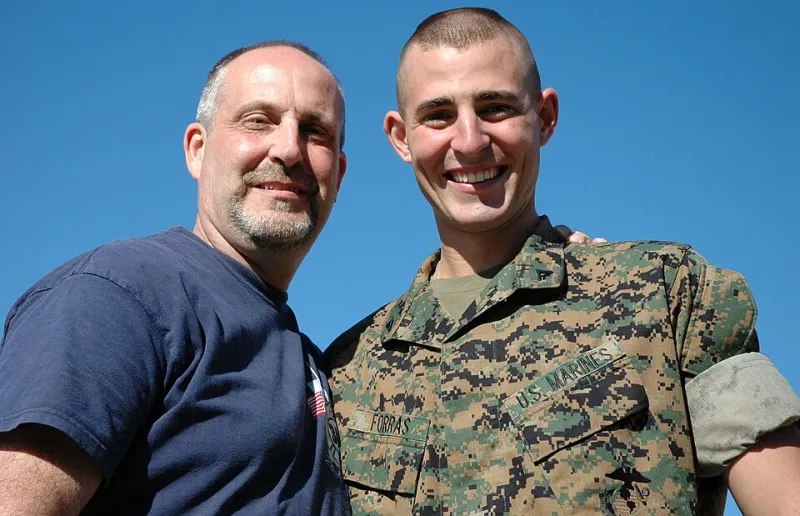
Photo: Cpl. Paul Leicht, Public domain, via Wikimedia Commons
When a soldier is wounded, a system engages. A family readiness officer makes contact. A casualty assistance officer is assigned. Payroll, benefits, and travel are handled by people whose job description includes handling them. The spouse is not left to reconstruct the household from a hospital parking lot with a cell phone and a prayer.
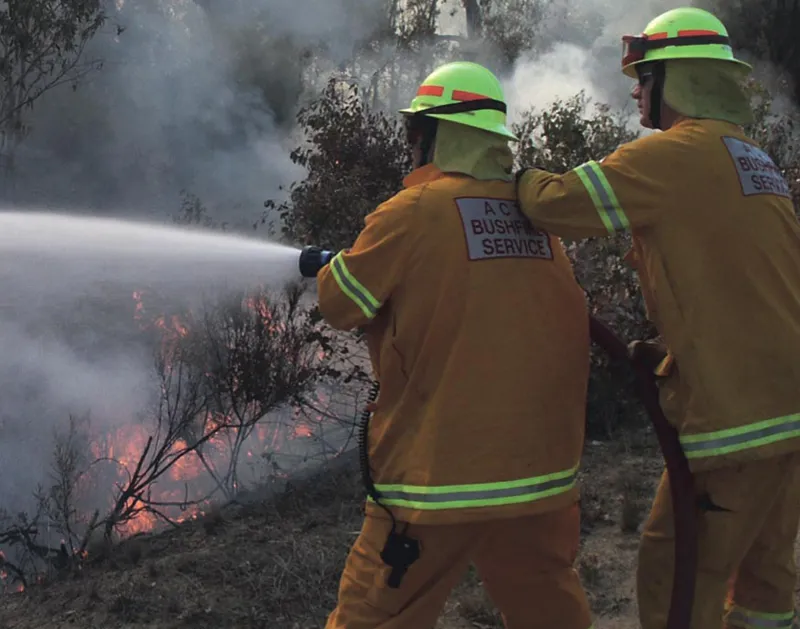
When a firefighter goes through a floor at three in the morning, or a deputy is shot during a traffic stop, or a paramedic is struck on the shoulder of an interstate, the response is different. The department grieves together. The union rallies. Somebody's cousin starts a fundraiser online. And the spouse — who has just become the head of a household in a single afternoon — spends the next ninety days figuring out the health insurance, the mortgage, the school pickup, the funeral arrangements, and the workers' compensation paperwork alone.
That is not a failure of courage. It is a failure of structure. And it is fixable.
The Case, Stated Plainly
Backing the heroes means backing the people who wait at home. It has become something of a slogan on this site, but it is also a design principle, and it demands more than yard signs and benefit chili cook-offs.
A family liaison corps would be a volunteer body, organized at the county level, trained in advance, and activated within twenty-four hours of a line-of-duty injury, death, or extended recovery. Not counselors. Not chaplains. Not replacements for peer support teams. Liaisons would do the unglamorous, indispensable work of logistics: explaining what the department's benefit schedule actually covers, collecting documents, coordinating rides to appointments, organizing childcare, keeping a written log of offers of help so the family is not answering the same question forty times.
The military already proved this model works. Navy ombudsmen, Army family readiness groups, and key spouse programs all exist because the armed services learned — repeatedly, and at cost — that a service member's effectiveness depends on the stability of the household behind him or her. Nobody in uniform thinks that structure is optional.
The Objections, Answered
The first objection is money. It is the weakest one. A county can stand up a liaison corps for the cost of a part-time coordinator, a background check budget, and a training weekend. Many volunteer fire and EMS organizations already maintain auxiliary units that could absorb the function. Sheriffs' offices and police benevolent associations already run relief funds. What is missing is not cash; it is a standing roster, a curriculum, and a phone chain that works on a holiday weekend.
The second objection is liability and privacy — a serious point, and one that should be answered in the charter rather than waved away. Liaisons should be background-checked, trained, bound by written confidentiality, and prohibited from handling money directly. Financial assistance should flow through existing relief funds with real books. The liaison's job is navigation, not disbursement.
The third objection is that departments already have a chaplain or a wellness coordinator. Good. The corps supplements them, and in most rural counties those roles are volunteers themselves, stretched across three townships and four agencies. A trained neighbor who can sit with a family and sort paperwork is not competition. It is relief.
How It Would Actually Work
A county board, a sheriff, or a fire chief designates a sponsoring organization — an existing first responder auxiliary, a veterans service organization, a faith-based volunteer network, a community foundation. That sponsor recruits from the most reliable pool in America: retired responders, veterans, military spouses, and empty-nesters who have already buried a friend in uniform.
Training is a weekend and a binder: benefits and workers' compensation basics, confidentiality and boundaries, how to talk to a child, how to work a phone tree, who to call at the state level. Each agency maintains three trained liaisons — never one, because one is a person and three is a system. When the call comes, two activate. The third coordinates.
And it is documented. Every activation produces a record. Records produce lessons. Lessons produce a corps that works in year five instead of one that has to be invented again after every tragedy.
The Ask
This is not a proposal for Washington. It is a proposal for the county commission meeting on the second Tuesday of next month, for the fire department's auxiliary, for the American Legion post that wants a project with a beginning and an end.
Ask your sheriff and your fire chief whether a liaison roster exists. If it does not, ask who is going to build one. Offer to be the first volunteer. Then attend the training and keep your phone on.
A nation that sends its people into burning buildings and onto dark highways owes the families who watch them leave something more durable than gratitude. It owes them a plan, standing ready, with a name and a number in a binder on a shelf — so that when the worst day comes, no one waits alone.